All Categories
Featured
Table of Contents
Although all GCC nations deal with the difficulty of guaranteeing future employment for nationals while maintaining reliance on foreign workers to fill specific roles, the seriousness of this issue varies throughout national contexts since GCC nations' demographics and concern locations diverge significantly. For countries that rely heavily on foreign labour, there is a risk that transition procedures will worsen bad working conditions and increase employees' vulnerability to exploitative practices.
Labour reforms in Qatar, for example, abolishing the questionable labour sponsorship system (Kafala); and presenting a minimum wage, are significant examples of reform. Economic diversity and associated green transition strategies produce sufficient chances however likewise improved responsibilities for business operating in the GCC area. Throughout this procedure, both federal governments and companies have a duty to regard and advance worker welfare and account for future labour needs through, for example, guaranteeing decent working conditions and investing in filling future skills spaces.
Why UAE REIT Regulations Are a Model for the WorldWhereas governments are needed to offer robust regulatory frameworks and enforcement mechanisms in line with international requirements, businesses have an obligation to regard internationally identified human rights and labour standards in line with the UN Guiding Concepts on Business and Human Rights. Organizations can also utilize their utilize to ensure that federal governments and partners enhance policies and responsibility systems, supplying an environment favorable to accountable organization practices.

Anticipating this danger and building capability around how to resolve this issue within the GCC context will be key to promoting accountable organization in the region.
(GCC). In 2010, oil and gas accounted for more than 70% of government incomes throughout the majority of GCC states.
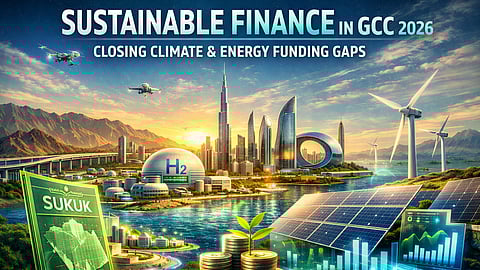
Vital Factors Shaping Gulf Market Outlooks for 2026
The UAE's non oil sector broadened by more than 6% in 2023. It is a structural improvement redefining economic influence and capital allocation in the area.
Oman and Bahrain have actually pursued fiscal consolidation and logistics driven diversity. These methods work as economic operating systems coordinating policy, capital implementation, facilities advancement, and foreign investment tourist attraction.
The UAE attracted more than $22 billion in FDI inflows in 2023, ranking amongst the top worldwide receivers. QatarEnergy devoted over $30 billion to LNG growth while parallel financial investments streamed into technology and sovereign portfolios abroad. Infrastructure, tourism, technology, renewable resource, and logistics are now soaking up capital when focused in upstream oil jobs.
Navigating Middle East Equity Exchange Shifts through 2026
Diversification is not just economic it is geopolitical. Financial power is increasingly measured by: Control over worldwide logistics passages Sovereign wealth fund influence in international markets Technological communities Ability to attract worldwide skill The UAE has positioned itself as a worldwide monetary and logistics center. Saudi Arabia is leveraging scale and domestic need to improve local supply chains.
As non-oil sectors broaden, financial durability improves. Break even oil rates have actually slowly declined in some GCC states due to varied earnings streams, including VAT, business taxes, and financial investment earnings. Capital streams within the area are also altering. Riyadh is emerging as a local headquarters center following Saudi localization regulations.
Sovereign Funds and Sustainable Development: A Symbiotic RelationshipSaudi Arabia led the area in IPO continues in 2023-2024, while the UAE continues to control in startup funding and tech ecosystem maturity. This redistribution of financial gravity is slowly recalibrating regional influence.
Top Foreign Investment Trends within the Middle East Market
The GCC is stagnating "away" from oil it is moving beyond reliance on it. Hydrocarbons will remain central to fiscal strength and sovereign financial investment capability. However, the strategic shift lies in transforming oil wealth into varied financial power. By 2030, non-oil sectors are predicted to contribute the bulk of incremental GDP development across the area.
The improvement underway is redefining both regional hierarchy and global capital combination.
Sweeping changes are pertaining to nations in the Gulf Cooperation Council (GCC). The United Arab Emirates (UAE) and the Kingdom of Saudi Arabia (KSA), long reliant on hydrocarbon exports, are charting a strong brand-new course towards financial diversity. Regional production and production are at the forefront of the shift, alongside growing sectors, consisting of tourism, retail, and technology.

Latest Posts
Top Foreign Investment Trends within the Middle East Market
The 2026 Investment Landscape of the GCC
Optimizing Investment Strategies for Next-Gen GCC Economy